The sales team had an overwhelming daily task list of customer follow-ups, many of which were cold leads that had been sitting for months. Manual task creation and pipeline management led to hundreds of leads slipping through the cracks. The result: lost revenue and sales time wasted on manual tracking instead of closing deals.
Lead Pipeline Optimization
The Problem
The Solution
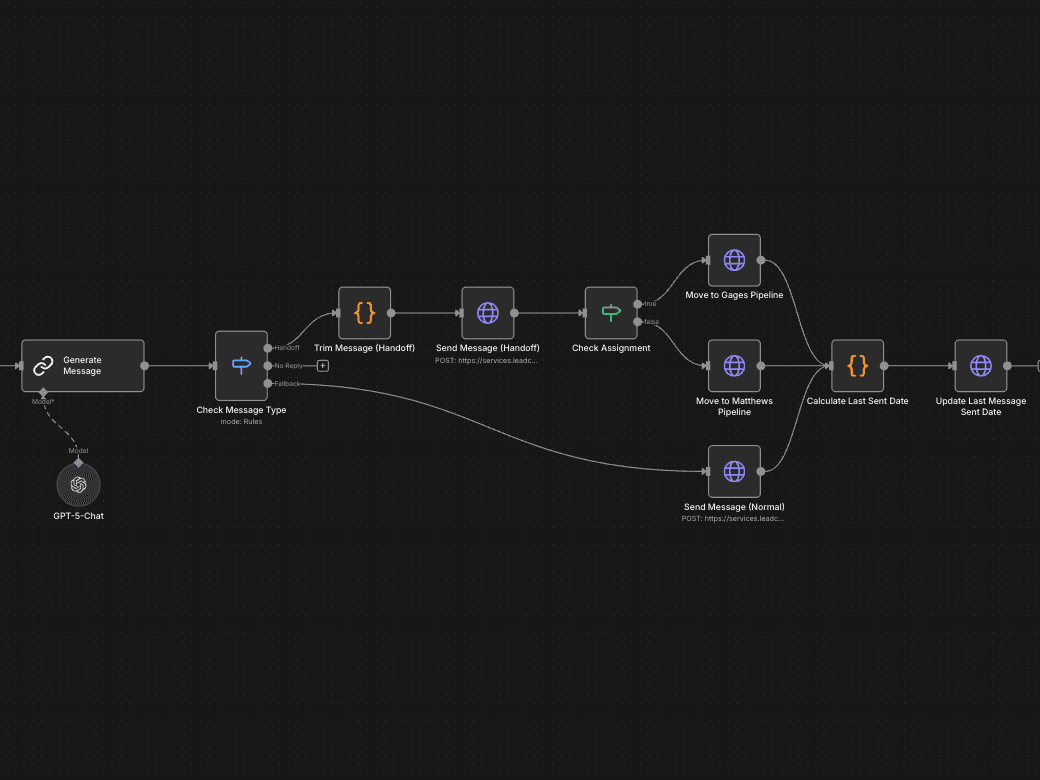
I built a three-tier automated pipeline that manages leads from first contact through conversion. An AI chatbot handles initial qualification 24/7, gathering vehicle details and context before passing off to a sales rep. After the rep has tried to close the lead for a few days, he then passes it to the automated follow-up AI chatbot pipeline.
The leads then enter a message sequence with scheduled follow-ups on day 3, 7, 15, and then monthly. On each message day, the chatbot sends a personalized follow-up based on the customer's conversation history, notes, and form data. If the customer re-engages, the system automatically notifies the sales rep and has a quick conversation before moving the opportunity back to the rep's pipeline. This system allows the company to manage 1000+ leads at a time with the work of one full-time sales rep. Everything integrates with their existing CRM for a clean, prioritized pipeline with minimal human intervention.
Evals
Generic mass text messages sent out by the company typically receive a reply rate of 1–2%. I decided customer reply rate would be a good proxy for measuring system performance.
When I initially deployed the system, response rates to the first message were between 8–10%, and by the third follow-up message, total response rates were around 20%. Prompt enhancements since initial launch have brought average response rates by the third follow-up message to a consistent 25–30%. Even though not all of these indicate a closed deal, it provided clarity to the sales rep on customer intentions without months of manual follow-ups.