
Most of my favorite TV shows and movies growing up portrayed the protagonist as a strong charismatic leader that always knew the right thing to say. As an impressionable child consuming this content, there was a sense that in order to attain impact in society, I must exhibit these qualities.
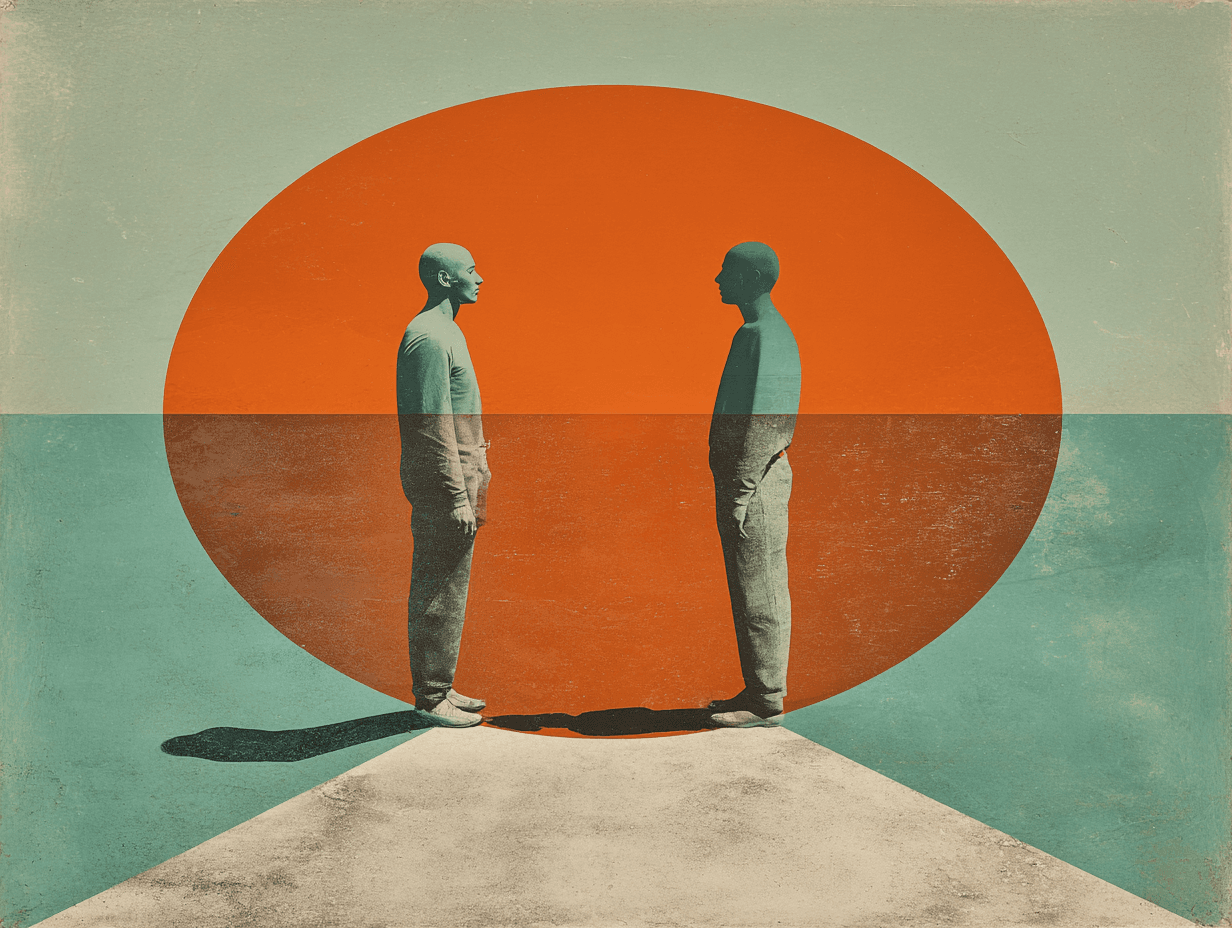
Throughout my life, I’ve lived with a dichotomy of personalities in constant tension. My extroverted self is always looking for the next opportunity, the next travel destination, a new friend group to learn and grow with. My introverted self is more reserved, satisfied with existing social ties, seeking solitude.
I've always had a favoritism toward the extrovert. In my fantasies of the future, I’m much more likely to be the dynamic personality that controls the room, as opposed to the reserved participant letting others take the lead.
Over the past few years, I have endeavored on the long and arduous journey of acceptance.
Acceptance of my cheery and optimistic self.
Acceptance of my reclusive and pessimistic self.
Acceptance of my curious and open-minded self.
Acceptance of my sad and lonely self.
All of these versions of the lived experience serve a purpose. If I never had a bad day, then the good days wouldn’t be as impactful. Joy and fulfillment would become the new normal. I would no longer have an emotional compass guiding me in the right direction.
Each side has its own strengths and weaknesses. My extroverted self inspired me to quit my job and travel the world for nearly three years. This experience profoundly changed my life. But towards the end of the trip, I could sense my social battery was running on empty. Constant life on the move forced my extroverted self to always be on. This led to long stretches of mental health struggles and internal conflict. I was not giving my introverted self enough time in the driver's seat.
Although most of my trip was marked by social interaction, I also had many periods of solitude. Alone in a room or the mountains with only a book, journal, laptop, or my own thoughts to pass the time. Some of the most calm and peaceful times in my life have been during these stretches. I realized I don’t need a life packed with social events to feel content.
My introversion allows me to focus on one particular topic for long periods of time without distraction. In early 2025, I became obsessed with artificial intelligence. I spent 12 hours a day for months learning about programming, neural networks, and the history of computing. This pace of learning would not have been possible if I felt the constant urge to surround myself with others.
In my early twenties, a weekend alone led to an inner dialogue that I am a loser with no friends.
In my late twenties, a weekend alone means the opportunity to read, learn, pursue goals, and process life without external distractions.
This is not to say that you should renounce all social ties and move to a cabin in the woods. We are social creatures by nature. Even Thoreau had consistent human interaction while he was writing Walden.
But the scales don't always need to tip in a certain direction. Social energy and solitude can coexist in harmony.
I always used to envy people on the extroverted end of the spectrum. Now, I’m not so sure. I fall somewhere in the middle, and I’m thankful for what each of those traits provides me.
If I’m being honest, I still have a preference for the extrovert. But once I relived the pressure to live up to some idealized version of myself, I started making progress on the path to acceptance.