
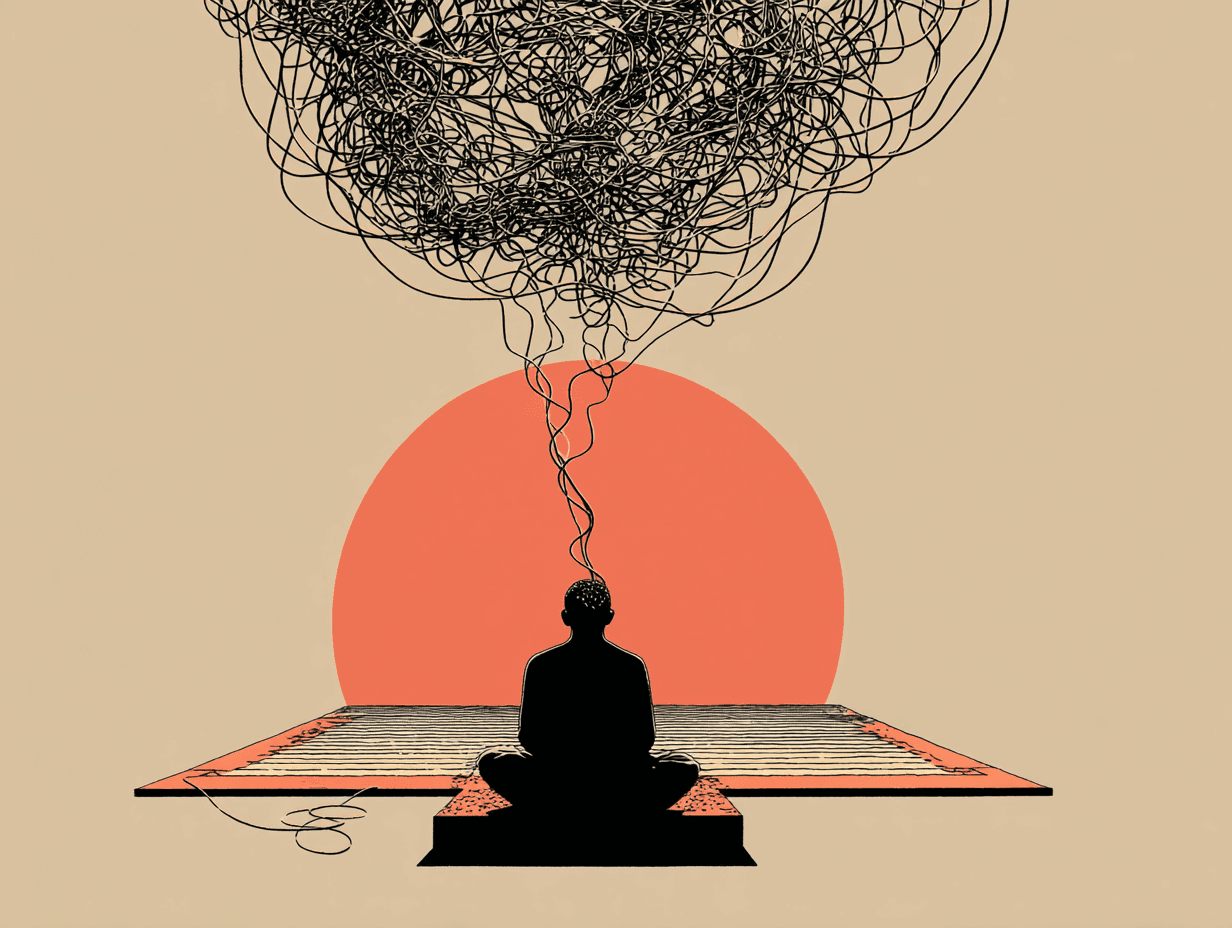
The gong rang at 4:15 AM every morning. 15 minutes to get out of bed, brush my teeth, and proceed to the meditation hall before the next gong at 4:30. The reward after two hours of meditation was a short break for breakfast in a silent cafeteria. After the break, it was time for another three hours of sitting alone with my thoughts.
If you’ve participated in a Vipassana meditation retreat, that description probably brings back some memories. There are hundreds of Vipassana meditation centers located around the world. All new students go through the same initiation: 10 days without technology, books, journals, or the ability to converse. The purpose is to create an environment with no external inputs. Only the meditator and their own mind.
This probably sounds torturous to most. You wouldn't be wrong in that assumption. The first few days, I struggled to focus my attention for more than 10 seconds. I sat for hours and hours trying to focus only on the sensation of the in-and-out breath passing through my nostrils. Instead, my mind was occupied with re-living previous romantic relationships, wondering about the lunch menu, and questioning what the hell I was doing sitting in a room full of strangers that decided to willingly take a vow of silence.
I was having trouble grasping the purpose of the technique and considered quitting several times. The other people participating must believe in some hippy spirituality that just wasn’t going to resonate with me.
But then on day four, my mindset began to shift. For the first time, I began to have an inkling of control over my inner dialogue. During that morning's meditation, I had stretches of extreme focus lasting 15-20 minutes. The volume of the roommate in my head that typically comments on every life decision was turned down.
Over the following six days, I progressed further and further into a state of presence. I vividly remember my lunch experience on day six.
After a two-hour meditation session, I assumed my assigned seat in the cafeteria. As I began to eat the soup of the day, I noticed a distinct change in my awareness.
I recognized the reflection of the scratches on the spoon. I could smell the nuance of flavors entering my nose before taking a bite. I felt the pressure of the floor pushing back up against my feet. I noticed the intricate details of the brick wall in front of me.
It was like I had a spotlight of attention on only the stimulus in my immediate line of sight. The experience only lasted a couple minutes, but the impact was profound. The peace and tranquility I felt during that fleeting moment was more powerful than any other experience or psychoactive substance I had tried previously.
I had similar brief stretches of awareness off and on for the rest of the retreat. I realized the beauty of every single moment lies just below the surface. I just wasn’t paying enough attention.
I have since completed two additional 10-day retreats. I view them as a reset. A way to give my mind a break from the excess stimulus of the outside world.
Every time I sit on the toilet during a retreat, I instinctively reach for my cell phone in my pocket. When I am forced into the boredom of staring at the wall in front of me, I realize the ubiquitous role technological devices play in my life.
I am always learning about new subjects to better understand the world. I spend many hours a day reading books, listening to podcasts, and watching videos about whatever currently has my attention. But it would be a mistake to fill every waking moment with content. The brain needs space between these bouts of consumption to process. It's not a coincidence that many of my best insights occur during multi-day trips in the mountains without an internet connection.
Bringing more presence into my life is no easy task. It took me six days of silence to even get a glimpse of what true presence actually means. Monks spend decades of their life meditating in the mountains trying to achieve enlightenment, often to no avail.
I certainly don’t expect to attain enlightenment in this lifetime, but finding more space for silence and solitude is at least a step in that direction.